End of Life Care

Why End of Life Care?

End of Life Care is a broad term describing all the decisions and activities that go into a person’s final days, months, or years. It can include managing symptoms that come with life-threatening illnesses, supporting a dying patient’s mental wellbeing, or guiding someone through the medical options that they can pursue.

End of life care can involve many parties, including doctors, nurses, social workers, chaplains, patients, and family members. Although most people in Western countries die in medical facilities, end of life care can also take place in many contexts, including nursing homes, hospitals, hospices, or even the home.

In historically Christian majority countries, healthcare has been strongly shaped by Christianity. This shapes how end of life care is administered. Even the advent of palliative care, which shifted focus from curing patients to increasing their comfort and dignity, was largely influenced by Christianity. This influence emphasizes particular notions, such as people “going to a better place” when they die or treating a patient’s “spiritual needs.”

Alt Text

How does the research work?

To explore changes in end of life care, our study adopts a multi-pronged approach. This mixed-methods approach comprise 4 sub-projects that apply interviews, survey, and meta-narrative review to a range of contexts.

Hospice Workers

To understand how people and their families experience the dying process in hospice and palliative care, we interviewed 63 people (and counting) across our seven research sites: Argentina (10), Australia (2), Brazil (9), Canada (18), Norway (3), the US (10), and UK (11).

Recognizing the range of people who play a role in healthcare – from medical professionals to admin teams and cooks – we approached the term hospice worker quite broadly, conducting interviews with people across a range of backgrounds. Conversations ask people to reflect on how they support people facing death, what services people value, and what gaps they see in healthcare systems.

Death Doulas

To understand the support that death doulas offer throughout the dying process, we interviewed 74 people across our seven research sites: Argentina (6), Australia (14), Brazil (12), Canada (11) Norway (4), the US (10), and UK (17).

This project again adopted a broad lens of the population, speaking with people who identify as death doulas, soul midwives, or thanadoulas. These terms describe a growing body of professionals who operate adjacent to traditional healthcare to support people and their families in navigating death. Conversations explore how doulas provide support, as well as points of tension that exist: between themselves and patients; between patients and families; or between themselves and the healthcare system.

Bereaved Outlooks on Good Death

Our team has developed a survey which aims to capture perspectives on what people consider to be a “good death.” Directed towards people who have recently experienced the death of someone close to them, this survey asks questions such as what services the deceased accessed during the dying process, how they responded to this care, and what value these supports provided. This survey is currently being circulated among respondents in Australia, Argentina, Brazil, Canada, Norway, the US, and UK, and thus far we have collected a sample of approximately 500 responses.

If you are interested in completing this survey and sharing your own experiences, we are still seeking respondents. To be eligible, you must be at least 18 years of age, and have lost a loved one within the last year. The survey can be completed by following this link: https://utampa.az1.qualtrics.com/jfe/form/SV_bpx7hiIzvFCtO8C.

Palliative Care Meta-Narrative Literature Review

The final study in this project is a large-scale literature review of academic research on palliative care. Looking at the largest and most influential journals on this topic, our work interrogates how end of life care is framed, and more specifically, how healthcare professionals understand the role of religion, nonreligion, and spirituality in administering care. Researchers have collected the entire catalogue of issues from seven journals in the field of death studies and palliative care: Mortality, Omega: Journal of Death and Dying, Death Studies, Palliative & Supportive Care, BMC Palliative Care, Journal of Palliative Medicine, and American Journal of Hospice and Palliative Care. This sample of thousands of articles dating back to 1970 is currently being analyzed with attention to key terms and their shift over time. This analysis will be used to inform a closer qualitative analysis of key publications.

What are we learning so far?

Together, these projects seek to push back against presumptions that all people at the end of life want or need some kind of spiritual care. Our work highlights that, to an extent, this narrative still has a firm hold on some in the end of life care space. From literature on palliative care to those who provide support, it is not uncommon to hear suggestions that people yearn for spiritual meaning, even if they do not recognize this desire. In challenging this supposition, our work seeks to shift emphasis to the broader patterns of what things matter to people at the end of life.

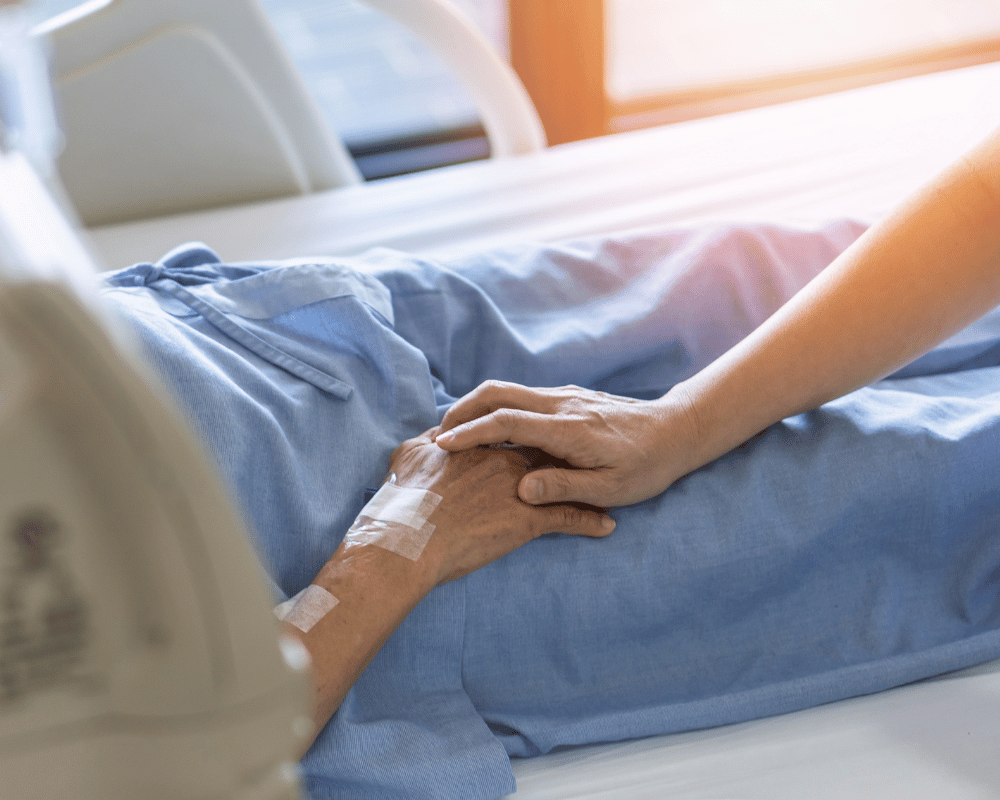
Across these sub-projects, family and connection to loved ones is seen as crucially important throughout the dying process. This can take on many forms, from having final conversations with a host of visitors to simply sitting at a person’s bedside, or even sitting vigil with a body after death has occurred. The diverse narratives people share reveal the importance of family and social bonds in bringing comfort to not only the dying person but the bereaved as well.

Another thread that recurs across projects is the importance of nature and the natural, non-human world. This again takes on many forms, including hospice facilities bringing a dog to comfort families, people wanting to view a nearby garden from their bed, or creating a calm environment in a room through the use of flowers, scents, and other natural materials. The array of experiences people share reinforce that for some, connection to the natural world is a way to find comfort as one approaches death.

A surprising finding that is emerging from this study are people who push back against the concept of a “good death.” This term circulates both within death studies literature and at a broader level in death positive spaces. While the specifics of a good death vary from person to person, it generally describes a death where the person experiences minimal pain and/or invasive procedures, and where their agency is respected. As a popular term in death discourse, we were surprised to encounter death doulas in particular who suggest that they dislike this term, feeling that it creates unrealistic expectations and stigmatizes those who do not experience a “good death.” Instead, many have proposed such alternative terms as a dignified or a conscious death. This shift reinforces that the emphasis throughout the dying process should be on the individual person and their specific likes, wants, and desires.

What are the projects next steps?

While data collection is ongoing in several countries, researchers have begun to code and analyze transcripts. Researchers are in conversation to compare and contrast the unique circumstances of end of life care across various contexts, and more broadly analyze how changing religious identities are impacting the ways that people approach and understand death.

Who is involved?

Results and Publications