Green Burials

What are green burials?

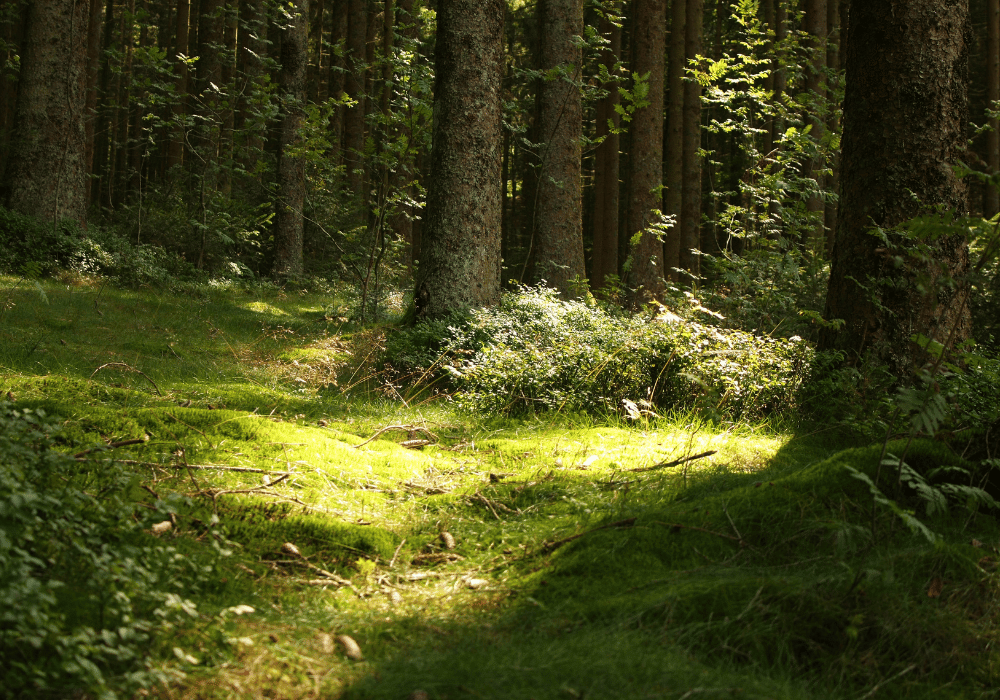
Green burials, or natural burials, are methods of bodily disposal which have a lower environmental impact than traditional burial or cremation. Green burials can take place in a forest, meadow, or other natural location. Efforts are made to avoid disturbing the surrounding environment, and no permanent markers are used to mark the site. The deceased is not embalmed, and buried in either a biodegradable casket or wrapped in a cloth shroud. Other “green” alternatives include aquamation (which uses water and other chemicals – rather than fire – to break down the body) and terramation (which naturally transforms the deceased’s body into soil).

Studying green burials can help us learn more about individuals’ lifestances. People opt for green burials for numerous reasons. Rather than the hazardous chemicals used for embalming or the disruption to green space traditional burial causes, these processes aim to minimize ecological impact. Another motivation is a desire to connect with nature. The dead “returning” to nature is a theme that appears frequently. This may refer to an image of the afterlife, in which people see themselves becoming part of nature, or more clinically, may refer to how decomposing matter literally supports new vegetation. Green burials also reflect a trend of reactions against the death industry. Through more personalized funerals and these alternative means of disposal, people break with the traditional script and reinterpret how we should commemorate death.
How does the project work?

This project applied a mixed-methods approach to understand the terrain of green burial within/across Canada. Members of the team first conducted a media analysis of news stories about green burial published in Canada. Using a sample of over 100 articles published between 2000 and 2024, we identified key terms and themes used when describing green burial, as well as the dominant reasons people cite for being drawn to this alternative practice.

Research also involved interviews and site visits with participants across Canada. Interviews involved a range of stakeholders, including cemetery staff, funeral directors, members of advocacy organizations, and people who are interested in green burials themselves. Overall, we interviewed 57 participants. Researchers also conducted site visits to cemeteries across several provinces: British Columbia (2), Ontario (5), Quebec (3), Nova Scotia (3), and New Brunswick (1).

Together, these methods help to deepen understanding of how green burial is understood in both mainstream society and by those who are at the forefront of the movement. This includes not only identifying the reasons why people are drawn to green burial, but also what structural impediments exist to implementing alternative death practices, and more broadly how nature, death, and grief co-exist in these spaces.

Alt Text

The map below highlights the sites in Canada that offer green burial services. In addition to showing all of the available sites, various levels of the map indicate which cemeteries offer certain services. Please note that this map adopts a broad view of the concept “green” burial, and therefore includes services such as scattering gardens or interring cremated remains in biodegradable containers.

If you have any questions or concerns regarding this map, please do not hesitate to contact Chris Miller by email: cmiller5@uottawa.ca

What are we finding so far?

Media coverage of natural burials indicates both a growing interest in the topic over time, and an overall increase in “green” options for final disposition. The reasons why these alternatives appeal to people include a focus on purely ecological factors (e.g., reducing one’s carbon footprint) but also trying to simplify how death is handled (e.g., removing “frills” associated with the corporatized death industry). Participants we interviewed also echo these motivations, but added more nuance to how people want to approach death. Some see green burial as a way to return to traditional roots. They suggest that modern society has become death averse, and green burial is one way people can become more comfortable with and conscious of natural cycles of living, dying, and remembering. Others are drawn to the way that green burial will allow them to re-enter the “circle of life.” Recognizing that one’s body will provide nutrients that support other life forms brings solace and comfort.

Alt Text

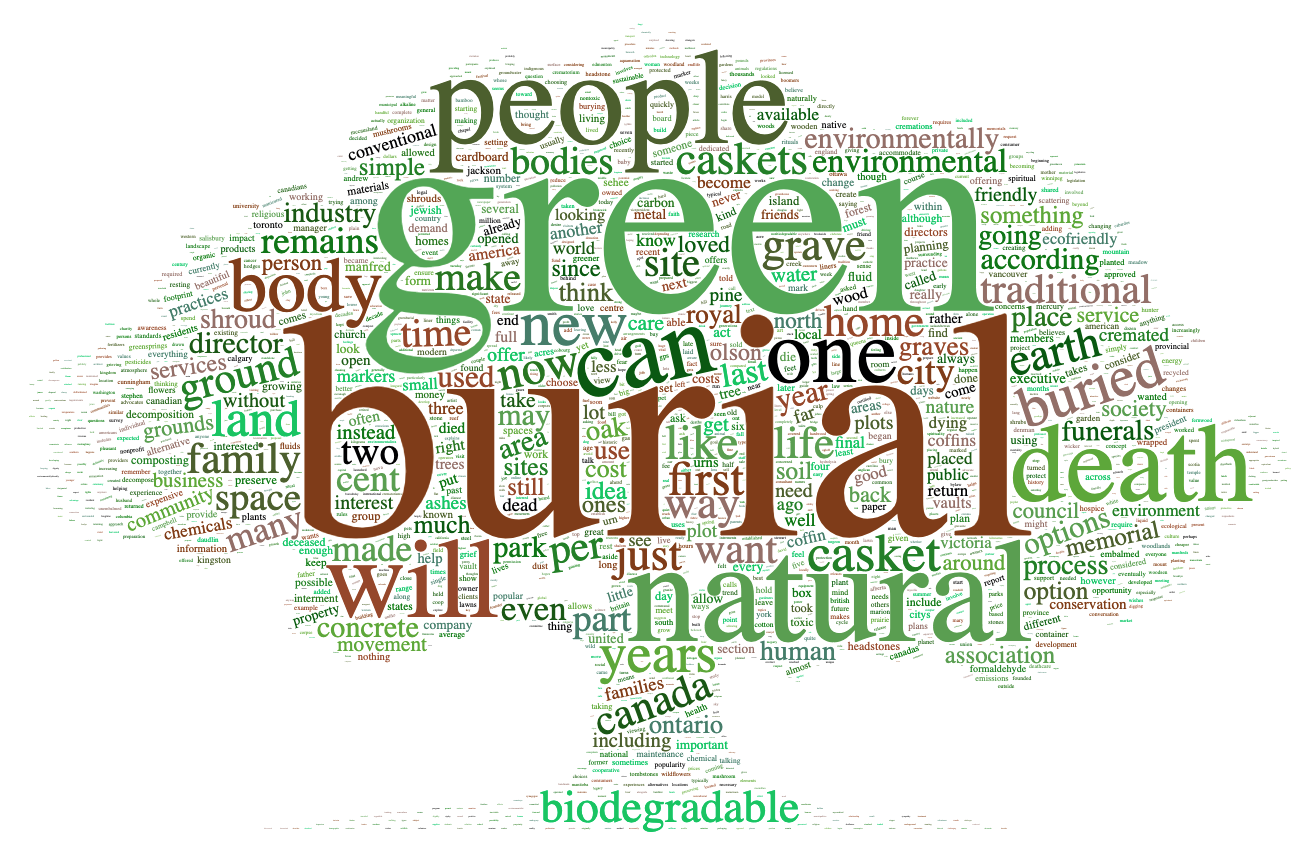
A wordcloud showing the most frequent terms across the sample of news articles about green burial

One potentially troubling finding was that, at present, the terrain of green burial proves difficult for the average person to navigate. Many people feel that they want something “green” at death, but lack an awareness of what this might look like on the ground. This confusion is partly created by the sheer plethora of existing options. Of roughly 40 available sites in Canada, only a handful operate as a fully natural cemetery. More common are “hybrid sites,” in which traditional cemeteries create dedicated green sections. Again however, what this entails varies from place to place. Some cemeteries in Quebec, for example, place “bio-urns” filled with cremated remains at the base of a tree. In contrast, some dispute whether this should truly be considered green burial. The landscape of natural sections also differs. Some are in lush forests while others are in open fields. Some are carefully manicured, while others allow tall grasses and wildflowers to take over the space. Each of these options represent different visions of what it means to be placed in nature.

Alt Text

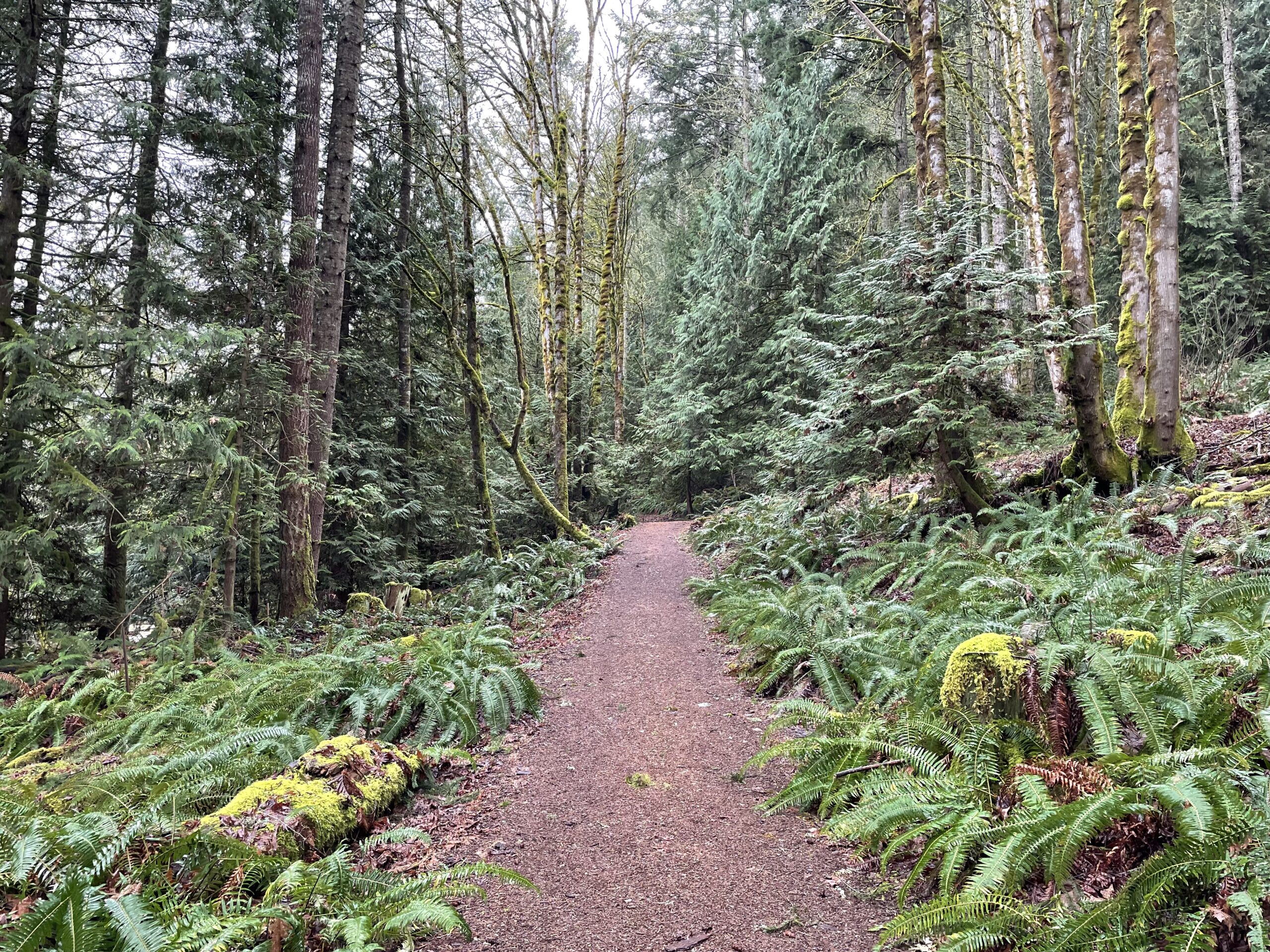
Salt Spring Island Natural Cemetery, is located on the side of a mountain in British Columbia, and the landscape is relatively untouched, except for a walking trail.

Alt Text

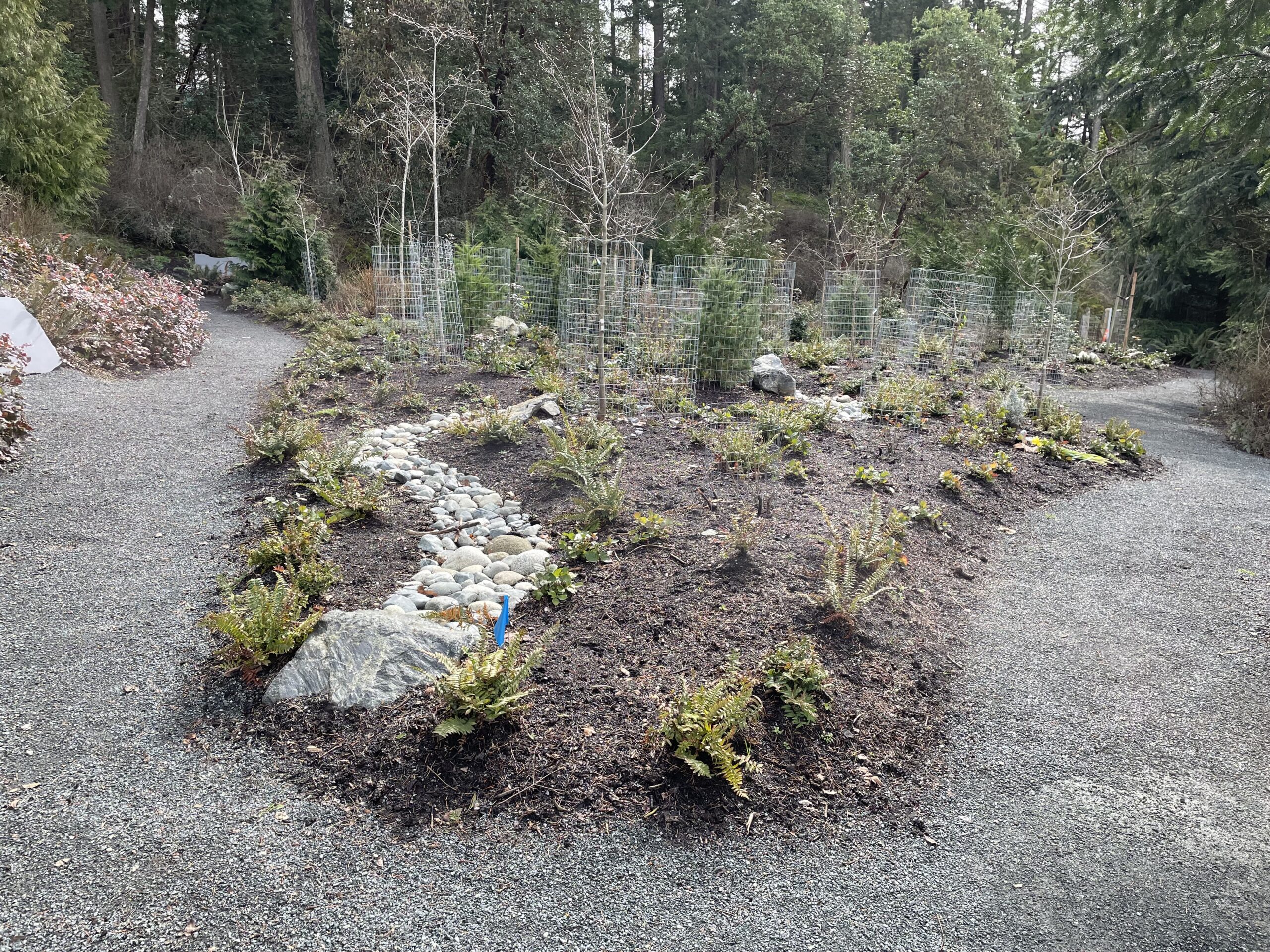
Royal Oak Natural Burial Park, also located in British Columbia, offers green burial in a more urban, landscaped setting.

Those who are drawn to green burial come from a range of religious, nonreligious, and spiritual backgrounds. More significantly, participants possess a broad range of afterlife imaginaries. As our team discovered in other projects, afterlife imaginaries can be divided into 4 main categories, which are not necessarily connected to a person’s religious identity. Green burial represents a ritual that resonates with the ideas one holds about the afterlife. Those who posit cessation, for example, want their body’s nutrients to be of some benefit to other living creatures. Likewise, those who posit continuation in some form see natural settings as the ideal place for their energy to reside. In this way, regardless of one’s religious, nonreligious, or spiritual identity, green burial offers a death ritual that coheres with afterlife imaginaries.

Beyond religious identity, a recurrent thread across participants were strong connections with nature. These included childhood memories of playing outside, or at present, activities like gardening, hiking, or having careers in ecological sectors. Many see green burial as a fitting testament to their lifelong connection with and commitment to the environment. In this way, green burial reinforces the concept of lifestance as a factor that shapes how people act within the world. Through this lens, death and dying is not purely shaped by religious or non-religious identities, but also by broader identities such as nature-lover or eco-activist.

Who is involved?

This project is led by: Lori Beaman, Chris Miller (postdoctoral fellow)

Working group members: Mathilde Vanasse-Pelletier, Lauren Strumos, Sofia Armando, Margit Warburg

Publications and Results

In episode three of the Lifestances Podcast, Food for the Plums? Green Burials and the Circle of Life,” Lori G. Beaman explores green burial practices with Margit Warburg, a sociologist from the University of Copenhagen, Maria Recchia, an activist in eastern Canada, and Christian Lomsdalen, the president of the Norwegian Humanist Association.

Media